How Should Students Choose CA Foundation Coaching After Class 12?


TL;DR
We help Class 12 students choose CA Foundation coaching after Class 12 by checking subject gaps, assigned faculty, course pace, tests, doubts, recordings, and all-in cost. This guide verifies ICAI timing, turns demos and student references into evidence, and ends with an enrolment checklist.
How Should Students Choose CA Foundation Coaching After Class 12?
CA Foundation is the first formal CA exam stage, and the decision deserves more than a city list or a testimonial. In May 2026, 18,124 of 90,217 candidates passed, a 20.09% result rate in the ICAI release.
We recommend choosing CA Foundation coaching after Class 12 by testing how well a course bridges Accounting, Business Laws, Quantitative Aptitude, and Business Economics. Compare the named faculty, pace, test calendar, doubt process, recordings, and total cost, then attend a demo that teaches an unfamiliar concept before enrolling.
We will help students translate their school background into a Foundation plan, verify ICAI timing, compare courses on evidence, and make a final enrolment decision with confidence.
What Does Your Class 12 Background Mean for CA Foundation Coaching?
Commerce, science, and humanities students can all begin CA Foundation. The useful question is not which stream is “best,” but where the student needs structured explanation, practice, and feedback before an exam attempt.
| Class 12 Background | Accounting Starting Point | Business Laws Starting Point | Quantitative Aptitude Starting Point | Business Economics Starting Point | Evidence To Seek |
|---|---|---|---|---|---|
| Commerce | Check accounting-process and final-account fluency | Often new legal-writing discipline | Check maths and statistics comfort | Refresh microeconomics concepts | Faster pace only after a four-subject diagnostic |
| Science | Usually needs an Accounting bridge | New legal terms and answer structure | May have a maths advantage, but statistics still needs checking | New economics vocabulary and graphs | Visible catch-up classes and early remediation |
| Humanities | Usually needs an Accounting bridge | May be comfortable reading concepts, but needs legal application | Check mathematics and statistics from week one | May have an economics base, depending on subjects | Explicit Accounting and Quantitative Aptitude support |
ICAI sets four Foundation papers, each carrying 100 marks: Accounting, Business Laws, Quantitative Aptitude, and Business Economics. That is why a credible course should show how it teaches each paper, rather than promising the same experience to every beginner through broad claims about its size or results.
A student who is strong in school mathematics may still need help with business statistics. A commerce student may move faster in Accounting but need more written practice for Laws. We recommend building the study schedule around those specific gaps, then using a Foundation study plan to judge whether the proposed pace leaves room for revision.
Which ICAI Rules and Exam Date Should You Confirm First?
Before paying for a batch, confirm the official pathway independently. Students can register for Foundation after Class 10, but ICAI requires the applicable study period and Class 12 eligibility before a Foundation attempt. Its current Foundation FAQ is the source to check when dates or eligibility change.
Foundation examinations run in January, May, and September. The minimum registration and study period is four months, measured on or before the first day of the examination month, so a coaching calendar cannot create eligibility if the ICAI timeline does not support it.
The official Foundation registration fee is documented as ₹9,000, including the prospectus and study material. Coaching, travel, test series, platform access, and recording extensions are separate decisions, which is why students should keep the official fee apart from the wider budget. Our CA course fees guide can help families distinguish course charges from preparation expenses.
How Can You Compare CA Foundation Coaching After Class 12 in Seven Steps?
A good comparison is sequential. Start with the exam attempt, then inspect how the course will carry a beginner from the first class through final mocks. That keeps a polished demo or a nearby location from deciding the whole purchase.

Diagnose Your Four-Subject Starting Point
First, write one practical issue for each paper. For example, a science student may need Accounting terminology, while a commerce student may need timed legal-answer practice. A diagnostic should reveal where the student needs a bridge, not label a stream as unsuitable.
Second, choose the intended January, May, or September attempt. Count backward from that date to reserve time for first coverage, revision, chapter tests, subject tests, and full-syllabus mocks. If a batch ends its lectures close to the exam, it is not a complete plan.
Verify the Named Faculty and Teaching Pace
Ask who will teach each paper in the exact batch, whether that teacher led the demo, and what happens if faculty change mid-course. Institute-wide reputation is weaker evidence than a written faculty assignment for Accounting, Laws, Quantitative Aptitude, and Economics.
Attend a class that covers an unfamiliar concept. Watch whether the teacher explains the starting point, works through an exam-style question, corrects a common error, and gives students a usable route to ask follow-up doubts. That comparison also helps students weighing coaching versus self study.
Inspect Tests, Doubts, and Recorded Backup
A Foundation course should move from chapter checks to subject tests and then timed full-syllabus mocks. Ask how marked work is returned, whether feedback identifies the error type, and whether weak students receive a remedial option rather than a generic encouragement message.
ICAI’s own coaching guidance describes topic-level MCQ assessment, doubt handling, and recorded lecture access. That makes ICAI guidance a useful baseline: paid support should show what additional structure, accountability, or access it actually provides.
Confirm Total Cost and Student Evidence
Request one written, all-in figure that includes tuition, tax, material, test series, platform access, commute, and recording extensions. A low headline price is not comparable if another course includes services that later become add-ons.
Finally, speak to current or recently completed students about faculty continuity, test feedback, and missed-class support. Students unsure whether they need paid help at this stage can also use our stage diagnostic before committing.
What Belongs in a CA Foundation Course Evidence Matrix?
A comparison table prevents students from relying on memory after several demos. We recommend filling it in during calls and classes, then refusing to treat a blank answer as a minor detail.
| Evidence Area | What To Record | Warning Sign |
|---|---|---|
| Faculty | Named teacher for each paper, demo teacher match, replacement policy | “Faculty may vary” without written confirmation |
| Pace | Start and end dates, hours by paper, revision weeks, target attempt | Lecture completion leaves no mock-test runway |
| Tests | Chapter checks, subject tests, full mocks, feedback turnaround | Only a final test series with no correction process |
| Doubts | Channel, response standard, live slots, remedial eligibility | Unlimited support claimed without an operating process |
| Recordings | Access period, missed-class rules, extension price | Terms revealed only after payment |
| Cost | Tuition, tax, books, tests, platform, commute, extensions | “Starting from” price instead of an all-in quote |
The table is intentionally provider-neutral. Students in Bangalore can use it for local classroom, hybrid, and online options without treating location names as a quality ranking. What matters is whether every answer is specific, dated, and applicable to the student’s exact batch.
Once the table is complete, compare the answers against a course comparison. A cheaper course may be better value, but only when its faculty access, tests, and backup conditions match the student’s needs.
A useful budget comparison lists tuition, taxes, study material, mock tests, platform access, commute, and extensions separately. It also records when each charge is due, because a modest admission payment can obscure later commitments. Students should compare written terms across their shortlist and identify what would happen if an exam attempt needs to move.
Those considering extra support can use our paid support diagnostic to decide whether a structured course solves a real study need or simply adds cost.
How Should You Use a Demo Class and Final Readiness Checklist?
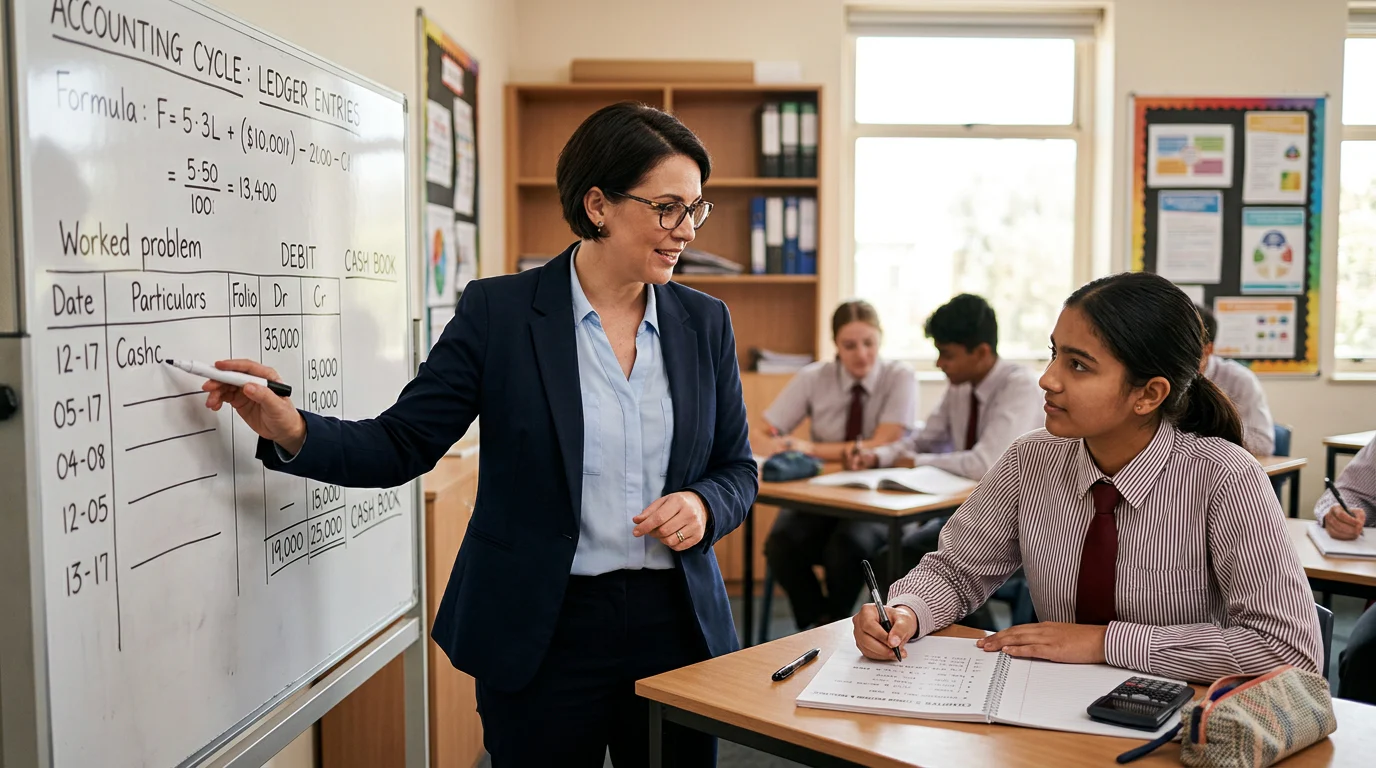
A demo is useful only when it tests teaching, not presentation. We recommend watching a lesson on a chapter the student cannot already solve comfortably, because pace, clarity, interaction, and error correction become visible there.
What Should You Observe During the Demo?
Check whether the faculty member defines terms before using them, connects the concept to a Foundation-style question, explains why the answer works, and pauses for a genuine doubt. Also confirm that the demo teacher is assigned to the actual batch.
Which Questions Should You Ask Student References?
Ask which teachers actually taught their four papers, how long test feedback and doubts took, whether the batch finished early enough for mocks, what extra charges appeared, and what happened after a missed class.
What Must Be True Before Enrolment?
Use this final checklist before admission:
- Exam eligibility: The intended attempt matches ICAI registration rules.
- Faculty assignment: All four subject teachers are named for the batch.
- Calendar: The schedule includes revision and timed full-syllabus mocks.
- Support: Doubt response, remedial help, and recording access are clear.
- Cost: The written quote includes every likely charge.
- Demo evidence: The student understood an unfamiliar concept and could see how doubts are handled.
- Reference check: At least two students confirmed practical details, not just a positive outcome.
Before enrolling, record the practical evidence from each student conversation instead of relying on a general recommendation. Our student reviews guide explains how to look for specific details rather than vague praise.
How Can iProledge Help You Choose CA Foundation Coaching?
At iProledge, we do not ask school leavers to choose a batch from a glossy brochure. We help them map their Class 12 background against the four Foundation papers, identify the first exam session they can realistically target, and ask questions that reveal a course’s day-to-day quality. Our counselling conversation can focus on named faculty, batch timings, learning mode, test calendar, doubt support, recordings, and every charge that belongs in the actual budget. We also encourage students to test a class on a concept they do not already know, because that is where pace, explanations, and access become visible. If a course suits your study habits and commute, we can explain its structure clearly. If it does not, we would rather help you see that before enrolment. You will leave with a written comparison, useful questions, and a clear next step. Start your CA Foundation decision with iProledge.
FAQs on CA Foundation Coaching After Class 12
Which CA Foundation Coaching Is Best for Beginners?
For beginners, choose coaching with named teachers, lessons from your weakest subject, scheduled revision, timed mocks, marked feedback, and a reliable doubt process before the exam.
Can Science Students Take CA Foundation Coaching After Class 12?
Yes. Science students should test their Accounting and Business Laws gaps first, retain their quantitative strengths, and choose a course with a clear bridge plan and remedial support.
How Much Should CA Foundation Coaching Cost?
We recommend comparing the written all-in figure, including tuition, tax, material, tests, platform access, commute, and extensions, alongside ICAI registration charges rather than trusting a headline price.