
TL;DR
At iProledge, we believe live CA classes with recordings should pair real-time teaching with a structured system for missed lessons, revision, doubts, and tests. This guide explains the recording-access terms to verify, a five-step recovery workflow, and a four-week Foundation bridge for science-background beginners.
How Should Live CA Classes with Recordings Work?
CA Foundation is demanding enough that a recovery plan should be part of the course design, not an afterthought. In May 2026, 20.09% of candidates who appeared passed the Foundation examination, according to ICAI results.
At iProledge, we treat live CA classes with recordings as structured backup for missed lessons, concept repair and revision, not an unorganised video archive. Students need prompt uploads, searchable labels, adequate access, transparent device and view rules, and a post-playback doubt route. Science-background beginners also need accounting and business-law bridge lessons before the Foundation pace rises.
This guide explains what live teaching should do, how recordings should work, what to verify before enrolling, and how beginners can catch up without turning every missed class into a backlog.
What Should Live CA Classes with Recordings Deliver?
A recording is not automatically useful because it exists. It becomes useful when it connects a specific live lesson to the topic, notes, practice questions, doubt process, and next test. That turns a replay into an academic recovery tool.
We recommend choosing a course structure that makes live learning the default. Live sessions are where students can ask why an entry is passed, test a Business Laws interpretation, receive correction on a working note, and stay accountable to a timetable. Recordings should protect that learning rhythm when life interrupts it.
| Student Need | Live-Class Responsibility | Recording-Backup Responsibility |
|---|---|---|
| New Concept | Explain the idea, diagnose confusion, and invite questions | Replay a specific explanation at a slower pace |
| Missed Lesson | Set the next class checkpoint | Restore the exact lesson, notes, and practice |
| Doubt Resolution | Clarify in real time or during a doubt session | Let the student submit a timestamped question |
| Practice Review | Explain errors and answer approach | Revisit the worked example before retrying |
| Revision | Prioritise gaps after tests | Refresh selected clips before active recall |
A strong system also prevents students from treating recordings as a reason to postpone attendance. If you are deciding between support options, our CA coaching choices can help separate useful structure from features that sound impressive but do not change your study routine.
What Should a Useful Recording Include?
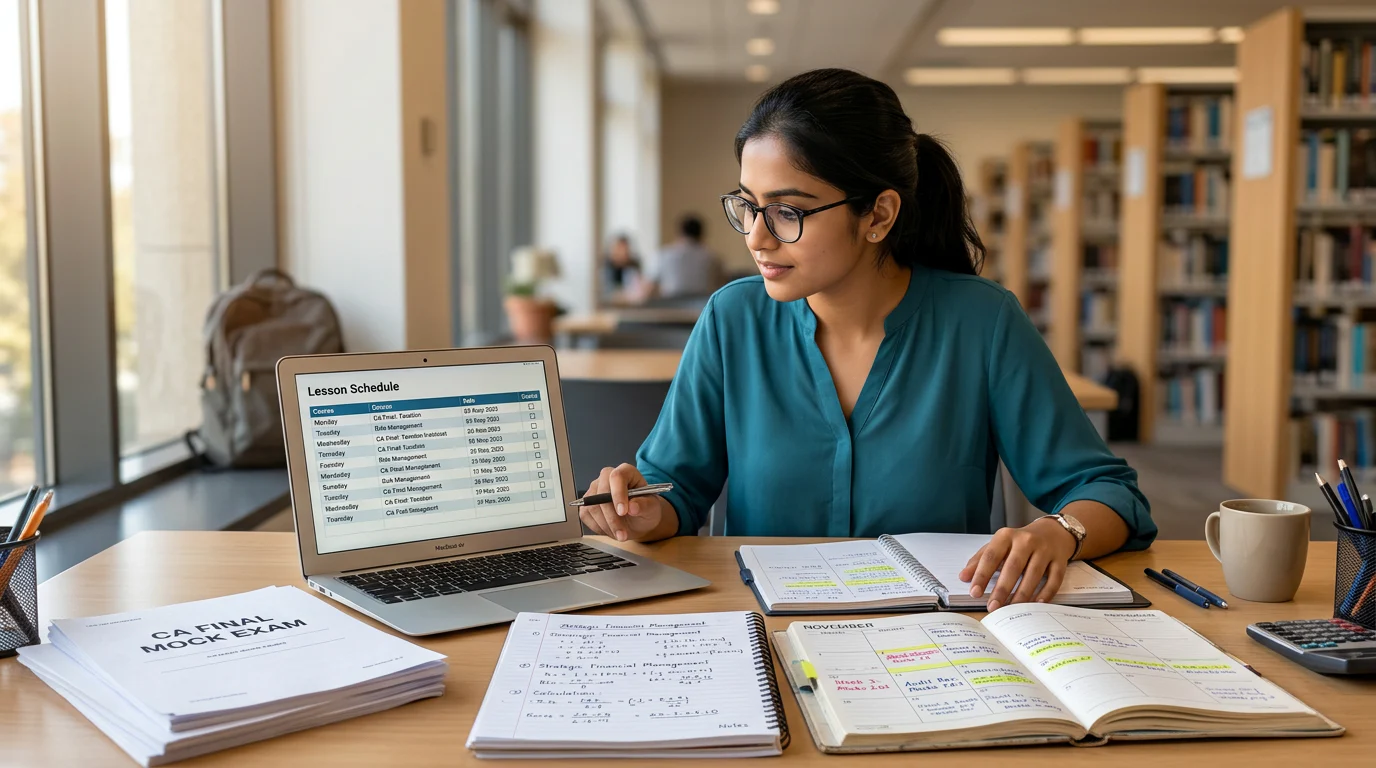
Each lesson should identify the paper, chapter, topic, faculty member, class date, and duration. The lesson page should also carry the relevant notes, practice set, and a way to mark a doubt against a precise timestamp.
For practical access, we recommend written confirmation of mobile and desktop availability, a resume point, playback-speed options, and clear rules for simultaneous devices. Captions or transcripts can also make video learning easier to revisit, particularly when a student needs to check terminology or a short explanation.
How Fast Should a Recording Be Uploaded?
We recommend an upload promise of within 24 hours after a live class. This is a buyer standard, not an ICAI rule, but it gives a student enough time to recover before the next lesson creates a second gap.
The important point is not merely speed. A recording uploaded quickly but filed under a vague batch name still wastes time. Prompt delivery and precise indexing must work together.
What Should Happen After You Miss a Live CA Class?
Missing one class should create a short, closed recovery task, not a growing list of videos to watch later. The best time to recover is before the next connected topic is taught, while the notes and examples remain relevant.
Research supports keeping a live rhythm. In a 2023 study of 694 students, about one-third said recordings led them to skip more classes and delay catching up, according to lecture-capture research. That is why we advise a recovery workflow with a completion test.
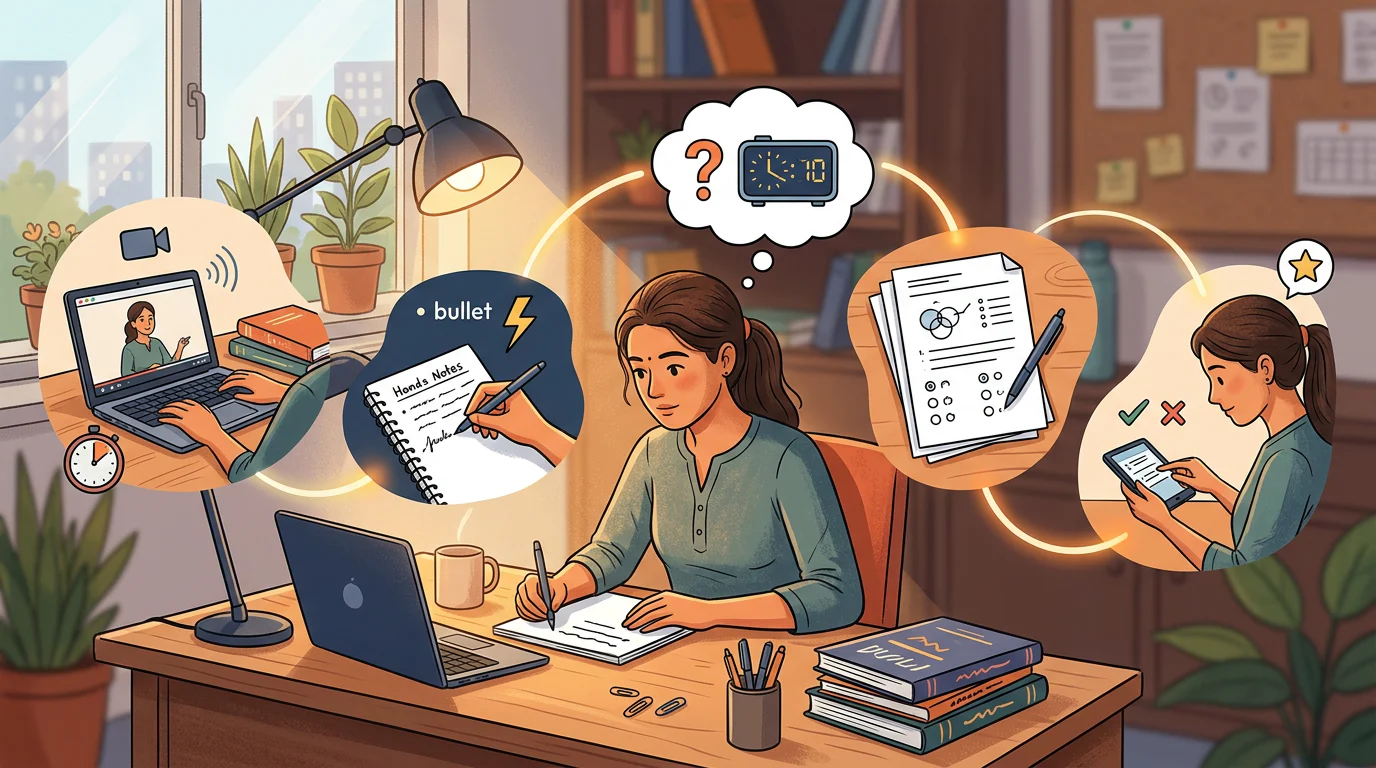
Follow This Five-Step Missed-Class Recovery Workflow
-
Open the correctly labelled recording and write the lesson objective at the top of your notes.
-
Watch new theory at normal speed, then replay only the timestamps that remain unclear.
-
Annotate the class notes and complete the linked illustration or practice questions.
-
Send a timestamped doubt with your attempted working, calculation, or legal reasoning.
-
Take a short recall quiz before the next live class, then carry one unresolved question forward.
A student who needs targeted support after a gap can also use our study-gap guide to decide whether the issue is a one-lesson repair or a wider study-plan problem.
How Should You Handle an Occasional Missed Class?
Use the five steps within 48 hours where the timetable allows. Attend the next live class, bring your prepared doubt, and do not rewatch the entire lesson if only one adjustment, formula, or provision caused the blockage.
How Should You Handle a Recurring Timetable Conflict?
Raise the conflict before enrolment. Ask for the recording-access terms, faculty doubt schedule, and test calendar in writing, then block two fixed catch-up sessions every week. Join at least one live doubt or test event weekly so recorded learning does not become isolated learning.
How Should Recordings Support Revision Instead of Replacing Live Learning?
Revision should not mean pressing play and hoping familiarity becomes recall. A recording is valuable for finding the exact explanation that repairs a weak point, but the next step must require the student to produce the answer without looking.
For example, after an Accounting test error, replay the adjustment explanation once, close the video, recreate the entry from memory, and solve a comparable question. For Business Laws, revisit the relevant rule, close the notes, and use a short fact pattern to practise identifying the issue and conclusion.
Use Recordings for Concept Repair
Choose a narrow timestamp, not a three-hour class. Write down what confused you, replay the explanation, and immediately solve one nearby illustration. If the method still does not hold, submit a doubt with the timestamp and your attempted answer.
Use Retrieval for Pre-Exam Recall
Rewatching can feel productive because the explanation is familiar. However, one study found that rewatching a class recording took three times longer than retrieval practice, without better long-term retention. Recorded-lecture research supports pairing clips with self-testing rather than using them as passive revision.
Build a revision log from mock-test errors, then use recordings only for the weak topics named in that log. Our Foundation 90-day plan gives a useful structure for placing those recovery blocks alongside regular practice.
Use Spacing to Avoid Last-Minute Rewatching
Revisit a difficult clip after a gap, then test yourself before replaying it again. A 2024 review found significant benefits from distributed practice or retrieval practice in 43 of 56 eligible studies, as reported in this systematic review.
This approach gives recordings a clear job: repair understanding, trigger recall, and then get out of the way.
What Recording-Access Contract Should You Verify Before Enrolling?
A course page may say “live and recorded,” but students need to know exactly what that promise covers. Access dates, view limits, device rules, and extension charges can change the real value of a batch, especially when a student is planning around school, college, or a recurring commitment.
Ask for the answers before payment, ideally in writing. This protects you from discovering that a valuable lesson expired before revision, that recordings cannot be searched, or that the available doubt option only works during a live class you cannot attend.
| Claim To Verify | Evidence To Request | Why It Matters |
|---|---|---|
| Recording Upload | Maximum time after each live session | Determines whether missed lessons can be recovered promptly |
| Lesson Indexing | Paper, chapter, topic, date, and faculty labels | Prevents time lost searching a large video archive |
| Access Validity | Exact end date and intended exam attempt | Protects revision access near exams |
| Device And View Rules | Device cap, simultaneous logins, and view limits | Avoids unexpected playback restrictions |
| Download Policy | Streaming or download permissions | Clarifies offline-study expectations |
| Extension Charges | Price, process, and eligibility | Makes future access costs visible |
| Post-Playback Doubts | Faculty route, response window, and proof required | Keeps a recording from becoming one-way teaching |
| Test Connection | Linked DPPs, quizzes, mocks, and error review | Turns viewing into measurable learning |
What Is a Fair Recording-Access Standard?
We recommend prompt upload, searchable labels, adequate validity for the enrolled attempt, transparent view and device rules, and a disclosed extension price. The right terms are the ones you can verify before payment, not the ones you have to infer later.
Why Does Faculty Access Matter After Playback?
A student often understands the point of confusion only while replaying a lesson. A useful package gives that student a defined channel to ask a timestamped doubt after playback, rather than requiring them to wait silently for an unrelated future session.
Before joining, review the people responsible for teaching and doubt support as carefully as the app features. You can start with our faculty when comparing the academic support you expect from a CA course.
What Should You Avoid?
Avoid vague promises with no access end date, no explanation of extension charges, no lesson-level index, and no post-playback doubt route. Also avoid assuming that a recording library equals a recovery system unless it links directly to notes, practice, and tests.
How Can Science-Background Beginners Bridge into CA Foundation?
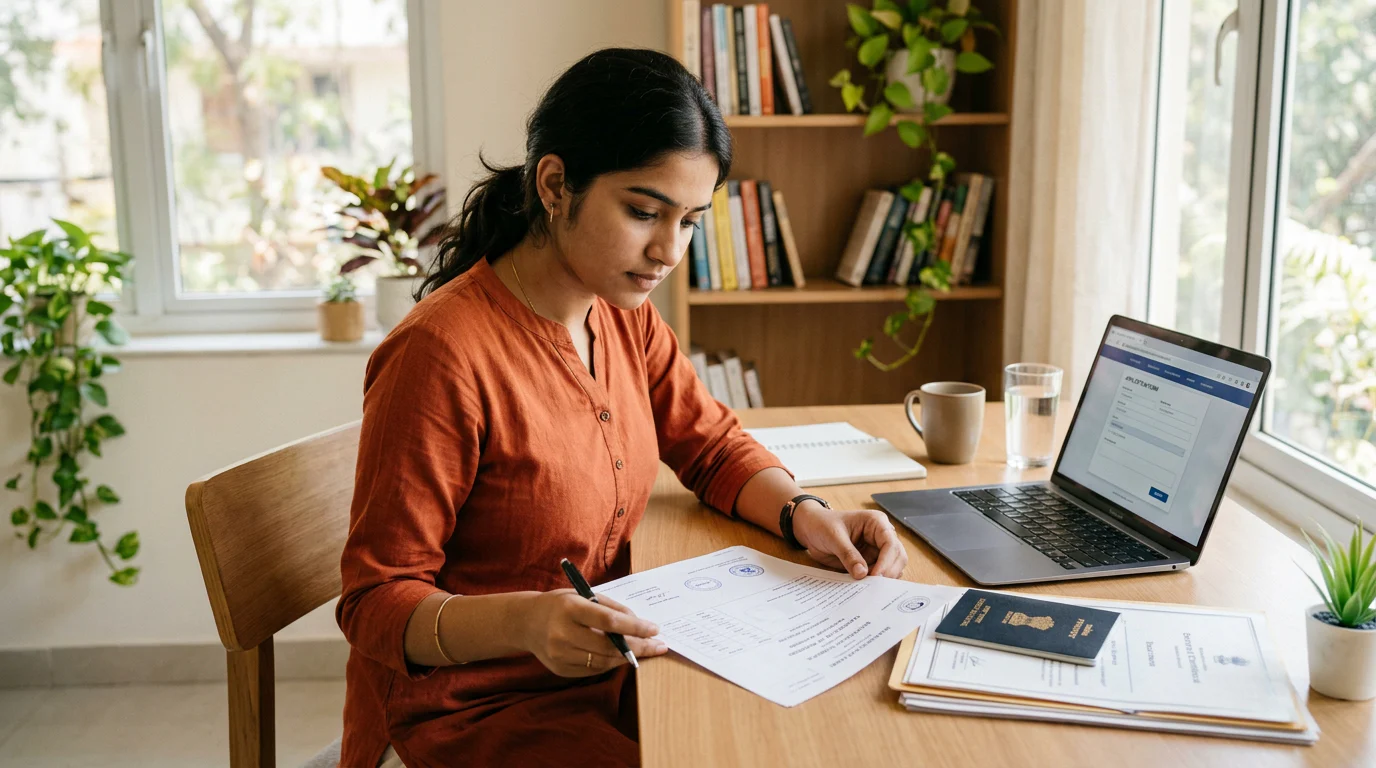
Science-background students can pursue CA Foundation, but the transition is easier when coaching recognises the difference between being eligible and being ready for the first Accounting and Business Laws lessons. ICAI permits provisional Foundation registration after Class 10, while admission is regularised after passing Class 12, as explained in its admission FAQ.
For a wider decision on timing and Foundation preparation after school, read our guide to Foundation after Class 12. The bridge should not dilute the Foundation syllabus. It should give beginners the vocabulary and mental models that commerce students may already know, then move them into the same exam-focused pace.
ICAI’s Foundation course has four 100-mark papers, including Accounting and Business Laws, so a beginner needs early clarity before the workload compounds. The right preparation removes avoidable vocabulary friction without reducing the standard of the eventual exam work.
Build Accounting Vocabulary First
Start with assets, liabilities, capital, revenue, expense, drawings, debit, credit, journal, ledger, and trial balance. The goal is not memorising definitions in isolation. It is learning how the terms connect in a business transaction.
Add a Four-Week Beginner Bridge
| Week | Learning Focus | Suggested Lesson Range |
|---|---|---|
| Week One | Business vocabulary and accounting equation | 4 to 6 lessons |
| Week Two | Debit-credit logic and journal entries | 5 to 7 lessons |
| Week Three | Ledger, trial balance, and common adjustments | 5 to 7 lessons |
| Week Four | Contract vocabulary, answer structure, and mixed recall | 4 to 6 lessons |
End the bridge with a short mixed diagnostic. A student who can explain an accounting equation, pass basic entries, identify key contract language, and complete recall questions is ready to join the full timetable with far less friction.
Before starting the full batch, learners should also agree a weekly revision pattern that leaves time for concept repair and question practice. That habit matters more than trying to complete a large archive at the end of the attempt.

How Should You Compare Live CA Classes with Recordings?
The best package is not necessarily the one with the most videos. It is the one that can show how live instruction, recorded recovery, doubt access, practice, and tests work together for your level and timetable.
Compare the written recording contract first, then ask how the course handles a missed class, a recurring conflict, and a beginner who needs more time with Accounting terminology. Those questions reveal whether the support system is designed for real learning or simple content access.
If you are choosing across Foundation, Intermediate, or Final, our overview of CA classes by level can help you match the support format to your current stage. The decision should also include whether you need a bridge, a recovery plan, or a more intensive revision structure.
Choose a Structured CA Study System with iProledge
At iProledge, we encourage CA students to ask better questions before they enrol. Do not settle for a general promise of recordings. Ask when each lesson is uploaded, how it is labelled, how long it remains available, whether device or view limits apply, and how doubts are handled after playback. If you are moving from science into Foundation, ask how the course introduces accounting vocabulary, debit-credit logic, and contract language before the main timetable accelerates. We can help you identify the support structure that fits your stage, attendance reality, and revision needs. We also encourage you to compare the timetable, mock-test rhythm, faculty access, and written extension terms before you choose. A clear answer today can prevent a lost week of catch-up later. Use our course pages to frame your questions, then speak with us about the study routine you need for the attempt. Start your CA conversation with iProledge.
FAQs on Live CA Classes with Recordings
What Is Recorded Backup for CA Classes?
Recorded backup is the linked replay of a specific live lesson, including notes, practice, and doubts. It restores a missed session and supports targeted revision.
How Quickly Should a CA Class Recording Be Uploaded?
Aim for access within 24 hours, then confirm the exact upload promise in writing. A useful recording includes its topic, class date, notes, and practice links.
Can a Science Student Join CA Foundation Coaching?
Yes. ICAI rules do not set a Foundation stream requirement, but science-background learners should build accounting vocabulary and contract language before full-speed teaching begins.
Do Recordings Replace Live CA Classes?
No. Recordings cannot supply immediate dialogue, peer questions, live correction, or accountability. Use them after an absence or to repair a defined gap, then return live.
What Should I Ask About Recording Validity and Extension Charges?
Ask for upload deadlines, lesson indexing, access end dates, device limits, download rules, extension charges, post-playback doubts, and proof that tests connect to recorded lessons.