
iProledge: ACCA vs Indian CA for London Jobs
ACCA vs Indian CA for London Jobs, compare employer recognition, audit rights, visa considerations, costs, timelines, and manufacturing finance role fit.

ACCA’s December 2025 exam sitting had 120,633 entrants, showing the scale of the qualification employers may recognise internationally. See the official ACCA results.
For an Indian finance professional targeting London, ACCA vs Indian CA for London Jobs is usually decided by role: ACCA is more immediately legible to UK employers and audit pathways, while Indian CA is stronger for Indian statutory practice and tax. Neither credential alone creates a job offer, visa, or UK audit-signing right.
We compare the syllabus, London hiring signals, audit rules, manufacturing-finance fit, costs, timelines, and practical routes for making a confident choice.
How Does ACCA vs Indian CA for London Jobs Compare?
The short comparison is not about which qualification is universally superior. It is about whether your destination, role, experience, and practice ambitions match the credential’s strongest signal.
ACCA is designed around a qualification structure that employers in the UK commonly understand. ICAI CA remains a rigorous and highly valuable qualification, particularly where Indian reporting, taxation, statutory work, and domestic practice are central to your career.
| Comparison Area | ACCA | ICAI CA |
|---|---|---|
| Governing Body | UK professional accountancy body | Indian statutory professional body |
| Core Coverage | Reporting, audit, taxation, finance, performance, strategy, ethics | Reporting, audit, Indian taxation, finance, strategy, ethics |
| Exams | Up to 13, subject to exemptions | Foundation, Intermediate, and Final stages |
| Experience | 36 months of relevant experience | Two years of practical training under the current scheme |
| UK Employer Legibility | Frequently recognised with ACA and CIMA | May be valued as an equivalent qualification, but needs explanation |
| India Practice Rights | Does not create Indian statutory practice rights | Supports India-specific practice routes, subject to applicable requirements |
| UK Audit Route | Requires separate audit and practising permissions | Does not automatically transfer into UK statutory-audit authority |
| Official Fees | Pound-denominated registration, subscriptions, and exam fees | Rupee-denominated course and examination fees |
| Best Immediate Fit | UK-focused industry and accountancy progression | India-focused practice, tax, and statutory work |
ACCA includes Applied Knowledge, Applied Skills, Strategic Professional exams, an ethics module, and a practical experience requirement. The official ACCA structure also makes clear that prior education can change the number of exams required.
For candidates with a relevant degree, exemptions can make the path more efficient, but they should be confirmed before committing to tuition. Our ACCA exemption plan can help you understand the practical questions to ask before choosing your route.
Do London Employers Prefer ACCA or Indian CA?
London employers rarely frame the choice as ACCA versus ICAI CA alone. Many finance adverts ask for ACCA, ACA, CIMA, or an equivalent credential, then assess the candidate’s reporting knowledge, systems experience, commercial judgement, and right to work.
A dated sample of London and Greater London vacancies from early 2026 showed this pattern clearly. A March City of London management-accountant role requested ACA, CIMA, or ACCA, while a May London financial-reporting role accepted ACCA alongside ACA, CIMA, CIPFA, or equivalent qualifications. Review the dated vacancies before treating any credential as an automatic hiring advantage.
What the Vacancy Sample Shows
The useful hiring signal is not that every London role demands ACCA. It is that ACCA is readily understood in the same qualification cluster as ACA and CIMA for financial reporting, management accounting, finance business partnering, and controller-track positions.
| London Role | Typical Qualification Signal | What Usually Matters Alongside It |
|---|---|---|
| Financial Reporting | ACCA, ACA, CIMA, or equivalent | IFRS, UK GAAP, consolidation, close process |
| Management Accounting | ACCA, ACA, CIMA, part-qualified accepted in some roles | Budgeting, variance analysis, forecasting |
| FP&A | Qualified or progressing accountant | Commercial modelling, stakeholder communication |
| Internal Audit | Relevant accounting or audit qualification | Controls, risk, process testing |
| External Audit | ACCA or ACA pathway often relevant | UK audit experience and regulated progression |
| Advisory | Qualification plus specialist experience | Client communication, reporting, analysis |
| Tax | ACCA, ACA, CA, CTA, or equivalent may appear | UK tax knowledge and technical depth |
| Controllership | Qualified accountant commonly requested | Leadership, compliance, month-end control |
Why “Equivalent” Needs Care
An advert that accepts an equivalent qualification does not guarantee that every employer will interpret credentials identically. Present ICAI CA clearly on your CV, then show the practical evidence that reduces uncertainty, such as IFRS exposure, month-end ownership, audit work, ERP systems, budgeting, or multinational reporting.
For a London move, visa eligibility remains separate from qualification recognition. You need an eligible role, an approved sponsor where required, and salary that meets the applicable immigration rules. Build the practical skills employers can see with our career readiness guide.
How to Position Indian CA Experience
Indian CA can be compelling for London employers when it comes with relevant work history rather than a title alone. A candidate who has handled group reporting, working capital, manufacturing cost control, audit coordination, or cross-border finance can compete far more effectively than one relying solely on qualification prestige.
Can You Work in UK Statutory Audit with ACCA or Indian CA?
Working in audit and signing a UK statutory-audit report are different things. An employee can support audit work without personally holding the authority to sign reports, while the signing route is regulated and substantially more demanding.
ACCA membership alone does not let someone sign a statutory-audit report. The UK route can involve an Audit Qualification, a Practising Certificate, Responsible Individual status, and a firm that holds the appropriate audit registration.
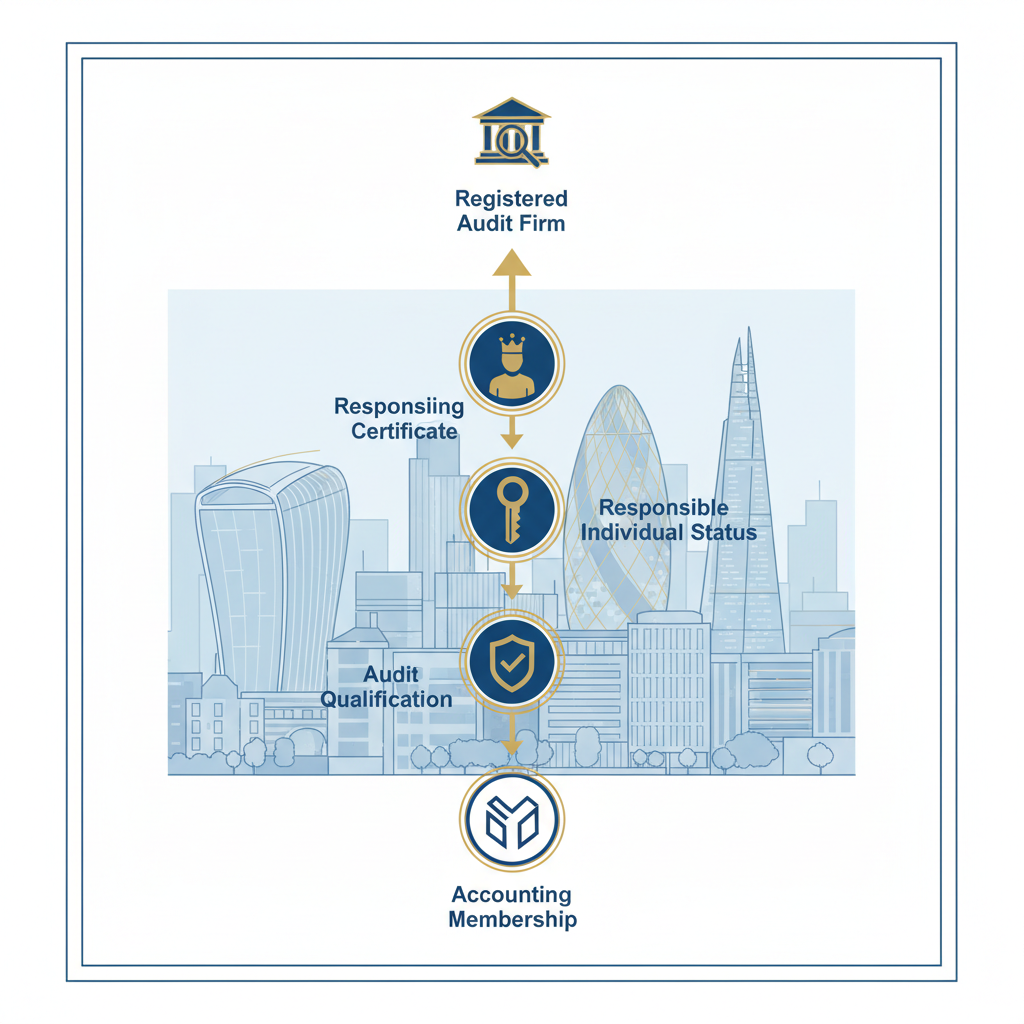
ACCA Membership Is Only the Starting Point
An ACCA member can pursue audit work, but statutory authority requires additional steps. The official UK audit route specifies UK law, tax, audit, reporting, supervised experience, and documented audit competencies.
Audit Qualification Is Not Signing Authority
For the UK Audit Qualification route, ACCA sets three years of supervised experience, including 1,540 hours of audit training and 770 hours specifically in statutory audit work. Even then, the qualification itself does not automatically permit report signing.
Practising Certificate and Responsible Individual Status Matter
From 2025, ACCA separated its Audit Qualification and Practising Certificate processes. To sign audit reports, the individual still needs the relevant practising and Responsible Individual status within a properly registered firm.
Indian CA Rights Do Not Automatically Transfer
ICAI CA supports Indian practice and statutory work within India’s legal and professional framework. It does not automatically put a member on the UK register of statutory auditors, so candidates should treat a UK audit pathway as a separate regulated career plan.
For a broader view of UK career pathways beyond this comparison, see our UK career comparison.
Which Qualification Fits a Manufacturing Finance Professional?
For someone three years into finance at a manufacturing company in Mumbai, the strongest London story is usually commercial finance capability. Employers want proof that you can explain numbers to operational teams, improve reporting, understand margins, and support decisions.
ACCA can be a particularly natural fit if your goal is financial reporting, management accounting, FP&A, finance business partnering, or a future controller role in London. ICAI CA can remain equally useful if you already have deep Indian audit, tax, or statutory experience and can translate it into relevant business outcomes.
| Career Goal | Better Immediate Signal | Practical Priority |
|---|---|---|
| Financial Reporting | ACCA or ICAI CA with IFRS evidence | Consolidations, close, technical reporting |
| Management Accounting | ACCA often highly legible | Costing, budgeting, variance analysis |
| FP&A | Either, with commercial experience | Forecasting, modelling, influencing managers |
| Internal Audit | Either, with controls experience | Risk, testing, process improvement |
| External Audit | ACCA or ACA progression may help | UK audit experience and regulated route |
| Tax | Depends on jurisdiction and technical specialty | UK tax exposure for London roles |
| Controllership | Qualified accountant plus leadership | Controls, reporting, systems, team management |
For manufacturing candidates, do not underestimate the value of job-ready evidence. Build examples around standard costing, inventory, purchase-price variances, production margins, cash conversion, and ERP reporting. Our manufacturing accounting course is designed to help turn that experience into interview-ready skills.
- For Reporting Roles: Lead with IFRS exposure, reconciliations, close deadlines, and management reporting.
- For FP&A Roles: Show how your analysis changed a forecast, budget, price, or operational decision.
- For Controller Roles: Demonstrate controls, team coordination, audit readiness, and working-capital ownership.

How Do Time, Cost, and Conversion Routes Compare?
The best choice is not always the fastest on paper. It depends on where you are now, whether exemptions apply, how soon you want to relocate, and whether your target role needs UK-specific audit or tax knowledge.
ACCA’s 2026 official fees include an £89 initial registration fee and a £140 annual student subscription, with separate charges for exams and the ethics module. Check the current ACCA fees before budgeting, because late entry, exemptions, resits, and exchange rates can materially change the total.
ICAI’s official course registration fees include ₹9,000 for Foundation, ₹18,000 for Intermediate, and ₹22,000 for Final, before considering examination attempts and preparation costs. Its current course fee FAQ is the right starting point for verified Indian-course figures. For a broader decision framework, see our management accounting options.
For an ICAI CA considering ACCA, exemptions may reduce the exam workload, but ACCA does not award exemptions from Strategic Professional exams. For a UK audit route, older exemptions can also carry implications for eligibility, so verify the position directly before deciding. That is especially important if your relocation window is short, because completing a credential without UK-relevant work evidence may not improve your immediate eligibility for the roles you want.
If you are balancing budget against support needs, compare your study model honestly. Structure, feedback, and accountability can matter when you are balancing work, exams, and relocation planning.
How iProledge Helps You Choose the Right London Path
At iProledge, we help you make the choice based on the role you want to earn, not on generic claims about global recognition. Our study support starts with your current qualification stage, finance experience, budget, destination timeline, and the type of London work you actually want to pursue. We then help you identify whether ACCA progression, an ICAI CA-led route, exemptions, practical skill building, or a longer audit pathway makes the most sense.
We also help you separate what employers may value from what regulators require. That distinction matters when your goal is financial reporting or management accounting today, but statutory audit later. Our mentors can help you build a study plan, identify experience gaps, and create a realistic sequence for qualification and relocation. If you are unsure which route supports your next move, contact iProledge.
FAQs on ACCA vs Indian CA for London Jobs
This comparison works best when you separate employer recognition, practice rights, and immigration eligibility. The answers below address the questions London-bound Indian finance professionals ask most often.
Do UK Employers Prefer ACCA or Indian CA?
Many London employers recognise ACCA alongside ACA and CIMA. Indian CA can still be valued, especially when supported by relevant reporting, audit, commercial-finance, or multinational experience.
Is Indian CA Recognised in London?
Indian CA may be recognised by employers as a strong professional credential. It does not automatically create UK statutory-audit authority, practising rights, or guaranteed equivalence.
Can an ACCA Work as an Auditor in the UK?
Yes, ACCA members can work in audit roles. Signing statutory-audit reports requires additional UK audit, practising, Responsible Individual, and firm-registration requirements beyond ordinary membership.
Is ACCA Better for Manufacturing Finance Roles?
ACCA is often highly legible for management accounting, reporting, and FP&A roles. Manufacturing experience in costing, planning, and performance analysis remains equally important to employers.
Does ACCA Guarantee a UK Work Visa?
No. ACCA does not guarantee sponsorship or visa eligibility. You need an eligible job offer, an appropriate sponsor where required, and compliance with current immigration rules.