
TL;DR
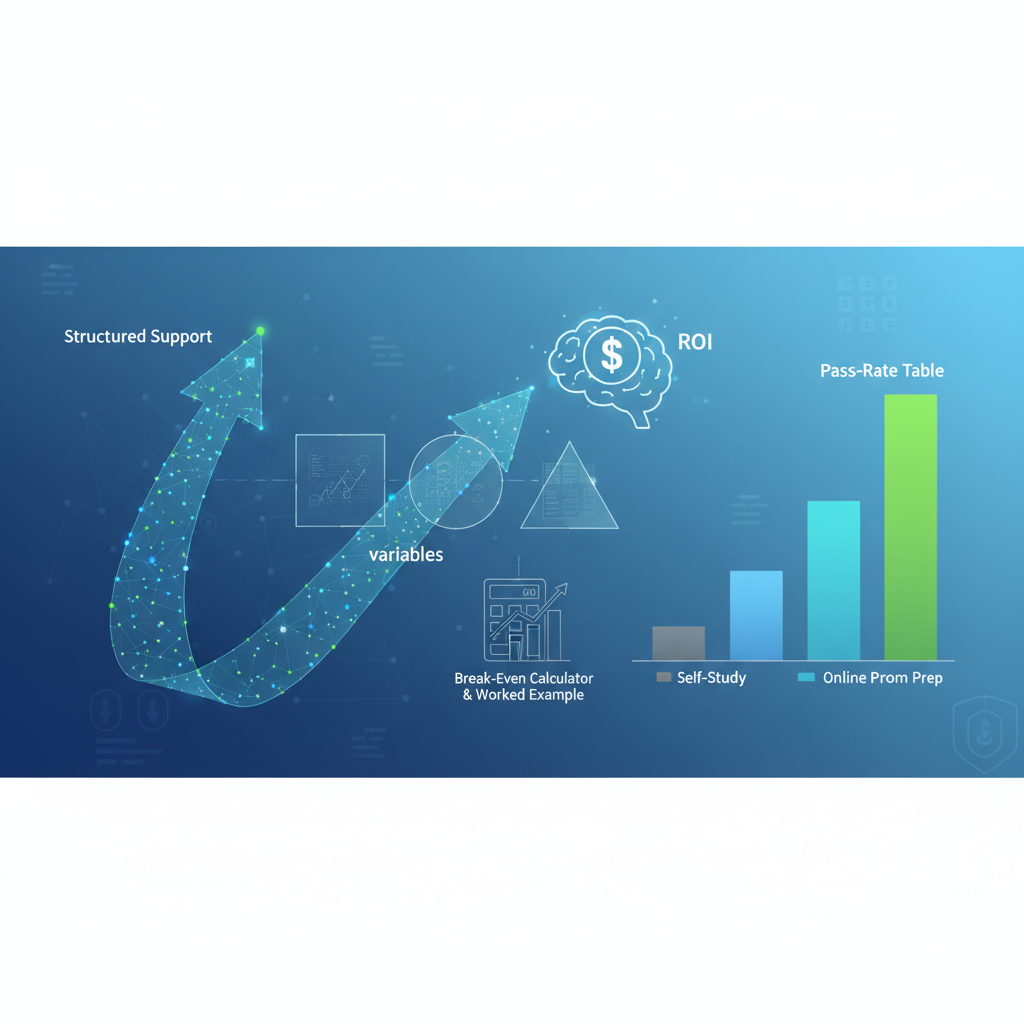
A four-variable CMA USA coaching ROI model with a break-even calculator, worked example, and a pass-rate table for self-study, online, and classroom prep.
The CMA USA exam has a global pass rate hovering around 45% per part, and FPA Education's analysis puts Part 1 closer to 35 to 40%. That means a large share of self-study candidates pay the exam fee twice, sometimes three times, just to clear one section, and every failed attempt quietly compounds into months of lost salary progression.
Coaching is worth paying for when it either lifts your realistic pass probability by roughly 10 percentage points per part or cuts three to four months off your total certification timeline, because either effect tends to offset both the retake fees and the foregone salary that self-study failure cycles create. Below that threshold, self-study with good materials is usually the smarter spend.
This piece builds the actual math behind that rule: a four-variable break-even model using coaching cost, self-study pass rate, coached pass rate, and monthly opportunity cost of delay. It also compares pass-rate ranges across self-study, online coaching, and classroom coaching for both exam parts, and flags the hidden costs most CMA USA prep guides never quantify.
What Existing CMA USA Prep Guides Leave Out
Most articles on CMA USA coaching list providers, compare features, and repeat the same pros-and-cons framework: flexibility versus structure, cost versus support. What they skip is the actual decision math. Nobody tells you the pass-rate improvement or time savings at which a coaching fee stops being an expense and starts being a return.
That gap matters because the two most-cited reasons for choosing coaching, mock exams and practitioner instructors, only pay off if they change your odds enough to beat what you would have spent retaking the exam alone. Structured mock exam programs close the gap between "I understand the material" and "I can perform under a timed, high-pressure test," which is a real advantage. But an advantage is not automatically worth its price tag. This article treats that as a calculation, not a feeling, and gives you the formula to run with your own numbers before you commit to courses list or open a study guide and go it alone.
The Four-Variable Coaching ROI Model
Every CMA USA coaching decision reduces to four numbers you can estimate honestly about yourself: what coaching costs, how likely you are to pass on your own, how likely you are to pass with structured support, and what a month of delay actually costs you in foregone income. Once you have rough values for each, the break-even math is simple arithmetic, not guesswork.

- Coaching cost (C): the total fee for the program, including any live classes, mock exam access, and mentorship, not just the headline tuition number.
- Self-study pass rate (P_self): your honest estimate of passing each part without structured support, based on your accounting background and available study hours.
- Coached pass rate (P_coach): the pass probability you expect with structured mocks and instructor feedback, which prep providers and coaching platforms generally report clustering toward the upper end of the reported global range.
- Monthly opportunity cost (K): the salary or promotion value you lose for every month certification is delayed, which varies by role but is rarely zero for working professionals.
You financially justify coaching when its cost is less than or equal to the saved retake fees plus the salary you'd otherwise lose to a delayed certification.
Break-Even Calculator: Run Your Own Numbers
The formula itself is short, but it only works if you plug in numbers you actually believe about your own study habits, not aspirational ones. Walk through the five steps below with a pen and your own estimates before you compare providers or sign up for admission.
Here is the break-even formula in plain terms:
Coaching pays off if: C ≤ [(1/P_self − 1/P_coach) × Exam Fee Per Part × 2 parts] + (Months of Delay Saved × K)
The first bracket estimates how many fewer retake cycles you will need across both parts. The second term estimates the salary or opportunity value of getting certified faster. Add them together, and that is the maximum coaching fee that still leaves you better off than self-study.
Step-by-step:
- Write down C, the full price of the coaching program you are considering.
- Estimate P_self honestly. Be skeptical of your own discipline if you have never sat a professional exam before.
- Estimate P_coach using the pass-rate ranges in the next section as a reference point, not a guarantee.
- Estimate K, your monthly opportunity cost, using your current or expected post-certification salary difference.
- Estimate months of delay a retake cycle typically adds, factoring in re-registration and restudy time, then run the formula.
Worked example: Exam fees for professional-status candidates run $495 per part, and student-status candidates pay closer to $370 per part according to the same fee breakdown. Assume a self-study pass rate of 40% per part and a coached pass rate of 50%, both within the reported global ranges. The expected number of attempts drops from 2.5 to 2.0 per part, saving half an attempt per part, or roughly $495 in avoided retake fees across both parts at professional rates.
Now add the delay side. A widely discussed Reddit thread from CMA candidates cites post-certification starting salaries in the ₹8 to 15 lakh range in India, which works out to a monthly value in the ₹65,000 to ₹125,000 band. If coaching helps you avoid even one four-month retake cycle, that alone is worth ₹2.6 to ₹5 lakh in delayed earnings, before the retake fees are even counted. Under these assumptions, a coaching program priced well below that combined figure clears the break-even bar easily; one priced above it needs a stronger pass-rate case to justify itself.
Pass Rate Comparison: Self-Study vs Online vs Classroom Coaching
No official body publishes CMA USA pass rates broken down by preparation mode. The IMA does not release country- or method-specific figures, which is exactly why so many prep guides quote a single global number and move on. The table below combines the reported ranges across independent trackers and positions them by mode, using the reasonable pattern that structured, mock-exam-heavy cohorts tend to cluster toward the upper half of the published range.

| Preparation Mode | Part 1 Pass Rate (Reported Range) | Part 2 Pass Rate (Reported Range) | Basis |
|---|---|---|---|
| Self-study only | 35% to 40% | 45% | Lower end of global range per FPA Education |
| Online coaching (self-paced plus instructor access) | 40% to 45% | 45% to 50% | Mid-range figures echoed by IBSC |
| Classroom or live coaching | 45% to 50% | 45% to 50% | Upper end cited by TripleICA |
Treat these as directional ranges, not guarantees. The gap between the top and bottom rows is driven less by the format itself and more by whether the format forces timed, exam-condition mock practice. A self-study versus coaching comparison from a CMA prep provider notes that self-study works best for candidates with prior accounting or finance experience and strong independent discipline. If you already have that foundation, the range you should expect sits toward the top of the self-study row, not the bottom.
Hidden Costs Most Candidates Never Add Up
Coaching decisions usually get compared against a bare tuition figure, but self-study has its own hidden cost structure that rarely makes it into the sticker-price comparison. Understanding these line items changes what "self-study is cheaper" actually means once you factor in real retake behavior.
- Retake exam fees: each failed attempt requires re-registration at $370 to $495 per part depending on student or professional status, and this cost repeats every time.
- Entrance fee validity window: the one-time CMA entrance fee is valid for three years, so repeated retakes that push your timeline past that window can force a second entrance payment.
- Annual membership renewal: IMA membership is billed yearly, so a longer prep timeline means paying that fee more times before you ever finish both parts.
- Salary delay: every extra retake cycle typically adds several months to your certification date, and that delay applies directly against your expected post-CMA salary bump.
None of these costs show up in a simple "coaching versus self-study" price comparison, which is exactly why the break-even model above treats retakes and delay as first-class variables rather than footnotes. If you want a lower-cost path into cost and management accounting fundamentals before committing to full CMA prep, a focused primer like the cost accounting crash course can sharpen your baseline and shift your own P_self estimate upward before you decide.
When Self-Study Alone Actually Makes Sense
Self-study is not automatically the riskier or costlier path. It is the better choice for a specific candidate profile, and the model above should confirm that rather than argue against it.
- Prior accounting background: candidates with a commerce degree, articleship, or working finance role already have the conceptual base that coaching mostly exists to build from scratch.
- Proven exam discipline: if you have already cleared a rigorous professional exam through independent study, your realistic P_self is likely higher than the global average, which shrinks the coaching advantage.
- Low opportunity cost right now: early-career candidates with more schedule flexibility and less immediate salary pressure from a delayed certification see a lower K value, which raises the self-study break-even point.
- Access to structured materials without a live instructor: using a rigorous, mock-exam-heavy self-study plan closes much of the gap that coaching is otherwise selling.
If none of those describe you, or if you have already failed a part on your own once, the math in the calculator above usually tips toward structured support for your next attempt.
Get Structured CMA USA Support with iProledge
If your own numbers in the calculator above point toward coaching, the next step is picking support that actually moves your pass probability, not just your comfort level. iProledge builds CMA USA preparation around timed mock exams and practitioner-led sessions, the two factors that most consistently separate self-study attempts from cleared parts. Before you commit, talk through your specific background, timeline, and budget with our faculty team, or reach out through WhatsApp support for a direct answer on what a realistic pass-rate lift looks like for your profile. You can also review current batches and start your admission process once you have run the break-even math on your own situation. If you are still comparing salary outcomes across specialisations, our CMA India salary progression guide is a useful next read.
FAQs on CMA USA Coaching ROI
Is CMA USA Coaching Worth the Money?
Coaching is worth it when it raises your pass probability enough, or saves enough delay time, to exceed its cost using the break-even formula: retake savings plus foregone salary avoided.
What's the Real Difference Between CMA USA Self-study and Coaching?
Self-study relies on your own discipline and materials, while coaching adds structured mock exams and instructor feedback, factors most sources link to pass rates clustering toward the higher end of reported ranges.
What Happens If I Fail a CMA USA Part After Paying for Coaching?
Most structured programs include mock-exam reviews to diagnose weak areas before a retake, which typically improves second-attempt odds more than repeating self-study without changing your approach.
Do Hybrid CMA USA Prep Models Work?
Combining self-paced study with periodic live mock exams and mentor check-ins often captures most of coaching's pass-rate benefit at a lower cost than full classroom programs, based on reported outcome patterns.
Are Money-back Guarantees on CMA USA Coaching Worth Trusting?
Read the eligibility conditions closely; most guarantees require completed attendance and mock-exam participation, so they reward candidates who follow the structured plan rather than offering unconditional refunds.
When Should I Pay for CMA USA Support Instead of Self-study?
Pay for support once your own break-even calculation shows the coaching fee is lower than the combined retake fees and salary delay you would otherwise risk on a self-study attempt.